Appeals Court Rejects Trump DOJ Bid to Block 20,000 California Ballots
A federal panel has denied an emergency request from the Justice Department to set aside thousands of mail-in ballots in California, citing procedural limits.

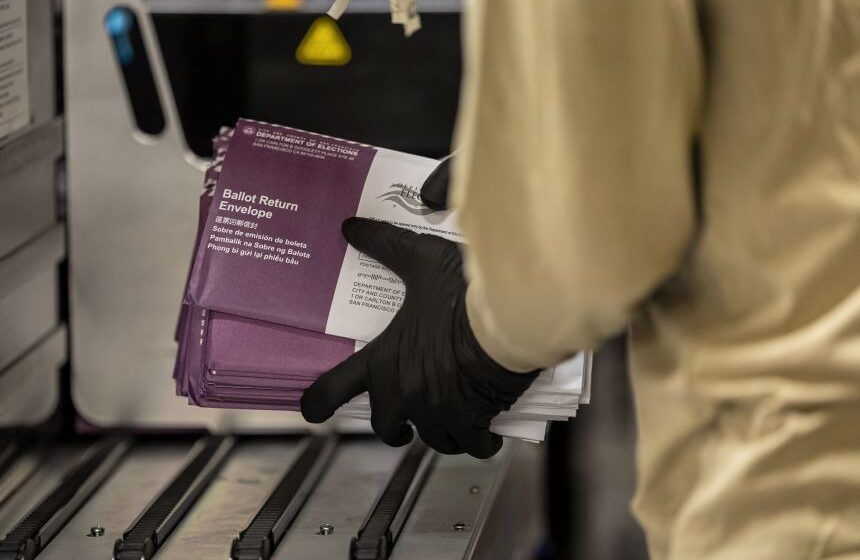
A federal appeals court on Monday delivered a significant legal defeat to the Trump administration by rejecting an unprecedented demand to invalidate 20,000 mail-in ballots in California. The Justice Department had sought to force the state to set aside these votes, alleging the individuals involved could be noncitizens. “So not that extraordinary to ask California to verify citizenship of a voter, correct.
A three-judge panel of the 9th US Circuit Court of Appeals issued a 2-1 decision denying the emergency appeal. The ruling followed an unusual Sunday hearing conducted via Zoom. Judges Mark Bennett, a Trump appointee, and Gabriel Sanchez, a Biden appointee, formed the majority, concluding that the appellate court lacked the authority to intervene in the Justice Department lawsuit before the lower district court had adjudicated the core issues.
In a pointed opinion, the majority addressed the administration’s sense of urgency, stating, “The United States’s claimed emergency, at least in part, is a self-constructed one.” The panel highlighted that the government’s delay in filing the suit, along with a lack of communication regarding its desired relief, undermined its claim for emergency intervention. The decision remands the case to the US District Court in California, where a hearing is scheduled for Tuesday at 4 p.m. ET.
Judge Patrick Bumatay, also a Trump appointee, dissented from the majority’s ruling. Despite focusing on procedural grounds, two members of the panel expressed deep skepticism regarding the merits of the federal government’s case during the emergency session. Judge Bennett indicated that if the court had possessed the authority to rule immediately, he would have ruled against the Justice Department, noting that federal law does not preempt states’ primary authority over election administration.
Bennett further cautioned that the action requested by the government “might result in immense hardship to Defendants and harm the public by risking the disenfranchisement of eligible voters and putting the entire tabulation process in jeopardy.” He questioned government attorney Matthew Donnelly on why the court should override California’s established election procedures, especially when the Constitution delegates such powers to states rather than the Executive Branch. “California can still (and in fact, it must) craft its own procedures governing Congressional elections and ballot challenges in those elections,” he wrote. “It seems to me you want us to issue an injunction that is entirely inconsistent with the law that the California legislature has adopted pursuant to the Elections Clause. The answer must be ‘yes,’” he wrote. “None of California’s counterarguments prevent the federal government from stepping in and seeking to stop California from burying its head in the sand while aliens may be voting in federal elections.”, under both federal law and the Constitution.
Judge Sanchez joined the skepticism, observing in a separate opinion that the requested injunction would likely cause widespread confusion, drain administrative resources, and “usher in electoral chaos” during an active election cycle. During the proceedings, Sanchez pushed for specifics regarding the list of 20,000 voters, noting that declarations from Department of Homeland Security officials relied on vague references to “third-party data.” When pressed by the judge, Donnelly could not identify the third parties involved in the analysis, leading Sanchez to note that the reliability of the government’s claims rested entirely on the credibility of that list. Sanchez asked pointed questions to Donnelly on Sunday about how the Justice Department and the Department of Homeland Security came up with its list of 20,000 voters, poking holes in gaps of the explanation the federal government provided in court filings. Sanchez noted that sworn declarations from two DHS officials about the process for creating the list of 20,000 voters included references to “third-party data or reliable third-party analytics,” pressing Donnelly to provide more detail about what that is actually referring to. “How was an injunction supposed to be entered in a matter of hours when there are so many factual issues that have to be unsurfaced in order to figure out whether there’s any merit to the government’s claims.
California’s representatives, including Samuel Siegel, argued that the federal government was utilizing “wildly outdated” data. California Attorney General Rob Bonta praised the ruling as a vital step in protecting the right to vote and upholding the state’s authority to conduct secure elections. The Justice Department had initiated this litigation earlier this month, part of an ongoing effort to expand federal oversight into state-level election administration. Following the appellate ruling, the matter remains focused on the upcoming proceedings in the district court. And that the Justice Department’s claims were based on unreliable lists of alleged noncitizen voters that were sent to the state while the election was already underway, the state and Los Angeles County argued Sunday that the Constitution grants the power to run elections mostly to the states. According to “In the midst of an ongoing election, the United, Asks the federal court to dictate to a state legislature a matter squarely within the state’s traditional domain, upending the state’s policies in this regard and i. “It is in the manner the federal government is asking here,” Siegel responded. “The question—does the federal government have the power to stop this potential attack on the integrity of our elections. This story has been updated with additional details.