Israelis Head to Polls Amid Security and Democracy Debates
Voters are casting ballots in a pivotal election, though projections suggest neither major political bloc will secure a clear parliamentary majority.

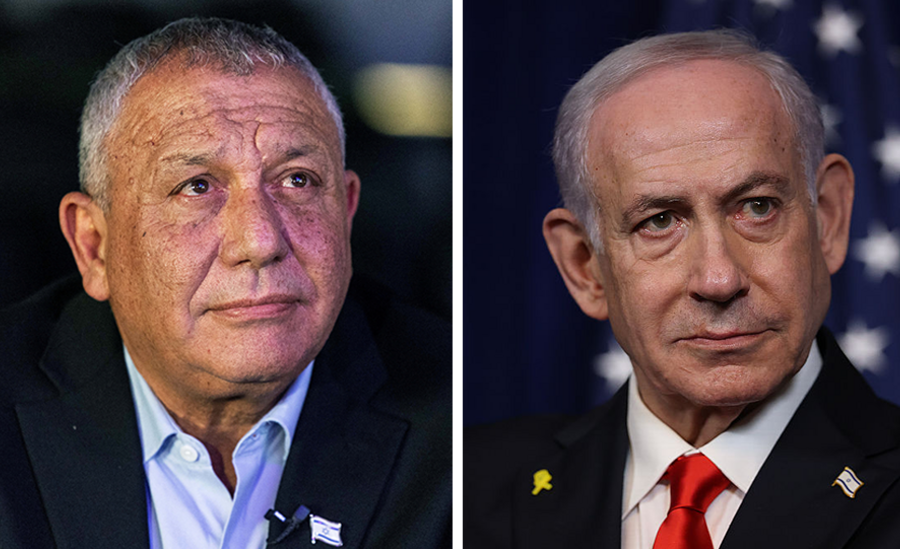
Israelis are participating in what is widely considered one of the most critical elections in the nation’s history. Projections indicate that neither of the primary political factions will secure the 61 seats required for a parliamentary majority, potentially leading to an extended period of post-election negotiations. But neither of their political blocs are projected to win the 61 seats needed to form a majority government – meaning weeks or months of political wrangling may lie ahead. But this election looks especially tight – and lines in the sand have already been drawn. And a minority government cannot be formed, an outcome dreaded by many is political deadlock – where no bloc is able to reach a majority.
Key Election Details
- Election status: Citizens are heading to the polls to decide the next government following a campaign centered on security and democratic concerns.
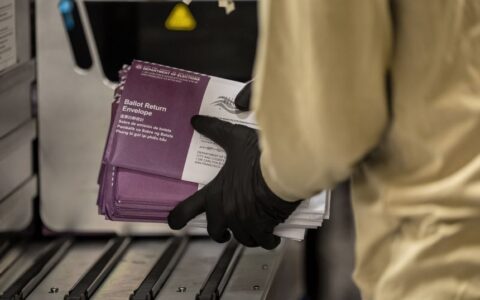
- Voter engagement: An unprecedented 70,000 people have traveled from abroad to vote, while 500,000 individuals are eligible to cast ballots for the first time.
- Monitoring results: Israeli broadcasters are scheduled to release exit polls at 22:00 (20:00 GMT) on Tuesday to provide early insights into the voting trends.
The campaign has been dominated by national security issues. The opposition bloc has centered its criticism on the severe security failures surrounding the 7 October Hamas-led attacks, which resulted in nearly 1,200 deaths and the abduction of 251 hostages to Gaza. Critics have demanded an independent commission of inquiry, a move consistently blocked by Prime Minister Benjamin Netanyahu on grounds of potential bias.
Despite these challenges, Netanyahu has campaigned on his image as a security-focused leader, citing strategic victories in regional conflicts and his robust ties with US President Donald Trump. His path to remaining in office relies on re-establishing a coalition with the same far-right and ultra-Orthodox parties that defined his previous administration. If no majority is reached, the country could face further elections with Netanyahu serving as interim leader. And has, produced unexpected alliances, israel’s proportional representation system means governments have always been coalitions – and the race to power can. A titan of Israeli politics who first served as prime minister in 1996, a return to power will hinge on another alliance with the far-right and ultra-Orthodox parties that make up his current governing coalition – the most right-wing in Israel’s history, for Netanyahu. And lead separate far-right parties, far-right ministers and settlers Itamar Ben Gvir (left) and Bezalel Smotrich (centre) and have been key voices in Netanyahu’s government. Deals and U-turns can be reached once the results come in, red lines like these mean the electoral arithmetic is complex – but it remains to be seen what kind of concessions. Between 2019 and 2022, Israel held five separate elections as parties struggled time and again to co-operate.
The opposition, led by Yashar Party founder Eisenkot, represents a diverse coalition united primarily by the desire to oust the current government. This “change bloc” includes figures such as Naftali Bennett, Avigdor Lieberman, and former general Yair Golan. Beyond security, these leaders have raised concerns regarding threats to democratic institutions, pointing to Netanyahu’s ongoing corruption trial and his pursuit of controversial judicial reforms. Eisenkot, who leads the newly formed Yashar Party, is the main figure in the so-called “change bloc”, a collection of parties who have ideological differences but share the goal of ousting Netanyahu. Who faces an ongoing trial on corruption charges – which he denies – and is still pursuing contentious plans for reforms to the judicial system, which led to mass protests before the 7 October attacks, the opposition bloc also point to what they see as threats to democracy under Netanyahu.
Tensions remain high regarding regional military strategy.
Reports from Channel 12 and CNN alleged that Netanyahu pushed for preemptive military action against Iran, a claim he has denied, noting that his own military chief, Eyal Zamir, and US President Trump had opposed such maneuvers. According to the following day, CNN, He had also tried to persuade Trump to carry out new strikes on Iran, but that Trump had refused to give the green light.
Additionally, Netanyahu faced criticism for an AI-generated image depicting a nuclear strike on Tel Aviv, which he used to assert his role as a necessary protector against Iranian threats.
Domestic policy has also been polarized by the issue of military conscription. The current government has failed to enforce a Supreme Court ruling requiring ultra-Orthodox men to serve in the military, a policy that remains a flashpoint while thousands of other citizens have been conscripted into active combat roles.
The conflict in Gaza continues to impact the political landscape, with the Israeli military reporting over 74,000 deaths since the war began, according to figures from the Hamas-run health ministry. Saying it is targeting Hamas operatives, israel has continued to strike Gaza almost every day since a ceasefire was agreed last year. And relations with its allies around the world have deteriorated, israel has faced growing international condemnation over its conduct in the war.
While Eisenkot has pledged to end Hamas rule in the territory, he maintains a similar security stance to the current administration regarding the West Bank. And has pledged to end Hamas rule in the territory within 18 months, through a US-led peace plan or, if necessary, military means, eisenkot takes a broadly similar position to Netanyahu on Gaza.
He supports the expansion of settlements while proposing a crackdown on extremist settler violence, though he has expressed willingness to consider forms of Palestinian autonomy under Israeli security control.
As voters cast their ballots, the prospect of a two-state solution has faded from the mainstream political discourse. With the Arab party blocs potentially acting as kingmakers—despite being excluded by most Jewish political factions—the final composition of the next government remains deeply uncertain. As about one-fifth of Israel’s population is Arab – many of whom describe themselves as Palestinian citizens of Israel, there are two Arab party blocs in the running too. In theory, they could prove kingmakers.