Mother of Soldier Jaysley Beck Continues Fight for Military Accountability
Following the 2021 suicide of 19-year-old Gunner Jaysley Beck after sexual assault and harassment in the British army, her mother Leighann McCready has turned detective to demand justice.

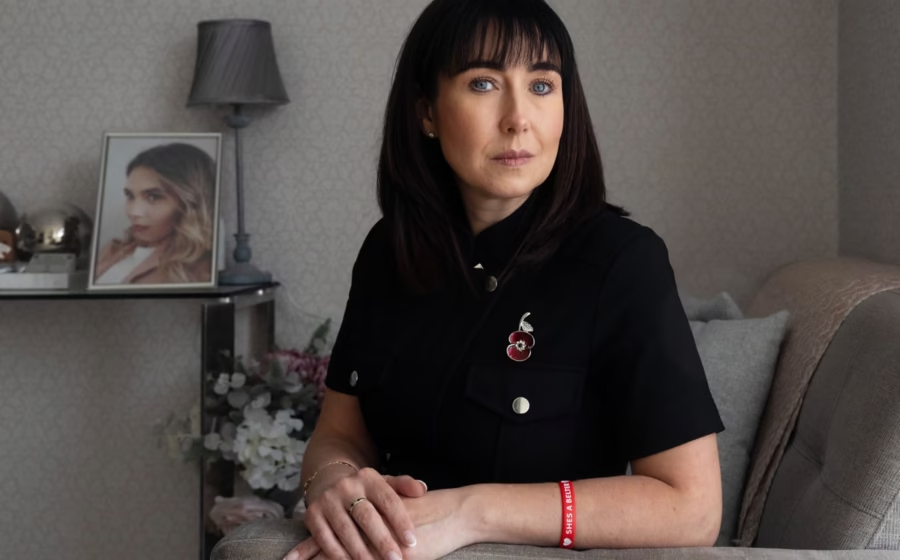
When Leighann McCready phoned her 19-year-old daughter, Jaysley Beck, on 15 December 2021, she got no reply, but brushed away her worries. “Jays always, always answered her phone, but it was early, eight in the morning,” she recalled. It was a busy time, deep in the countdown to Christmas. Soon, Beck was expected to be back home in Cumbria, where her parents, McCready and Anthony Beck, own a village pub. McCready had already bought matching Christmas pyjamas for Beck and her older sister, Emilli, to wear on the day. I continued ringing Jays’ phone – until somebody else answered it. It doesn’t register, no matter how many interviews I do or how many times I see Jays’ photo in the news. I remember her running round the village wearing backpacks weighted with bricks to build her strength up. I printed up a big picture of Jaysley and asked if I could put it in the tree so she’d be watching. She doesn’t watch TV either. “I don’t think it’s good for my mindset. I wanted to lie on my daughter’s bed.
Beck had been preparing for the holidays as well. She had been Christmas shopping two days earlier, calling and consulting throughout the day with her mother, who was transferring the cash to cover the expenses. She had bought presents for herself and her family, displaying no obvious warning signs of immediate danger. For her dad, she’d bought tickets for a James Blunt concert for the two of them to attend together in February.
Growing Concerns and Devastating Discovery
Despite the festive preparations, as the hours passed that Tuesday in December with still no word from Beck, McCready began to feel a deep foreboding. She knew that, in the preceding weeks, her daughter had been struggling through a strange and stressful situation at her military base. Concerned, Emilli offered to call one of Beck’s friends at the barracks, who assured them that Beck was probably fast asleep. “He said he was five minutes away and he’d go and wake her,” says McCready. “That five minutes just seemed like forever.” She was only tiny – probably a size six in clothes.”.
When the return call finally came, it was not the friend who answered. A military voice on the phone asked: ‘Hello, can I ask who I’m speaking to?’ McCready remembered the crushing moment: “And I just knew. They didn’t even have to tell me.” Gunner Beck had taken her life, alone in her bedroom at the barracks. Her suicide threw a spotlight on the British army and the treatment, safety, and protection of female recruits. Beck, an army soldier in the Royal Artillery, had been at a party the night before at her Wiltshire barracks.
A Mother Turned Detective
At every step—including the service inquiry, the formal inquest, and a subsequent police investigation—McCready has stayed in the public eye, talking to the press and advocating tirelessly for her daughter. “Grief is not what you see on TV, where you instantly fall to the floor and break down in tears,” says McCready, who has worked for 30 years in the care sector, much of it as an end-of-life nurse. “The moment I found out, I automatically went from being a mum, I call it my ‘invisible uniform’ and I have never taken it off.” I couldn’t turn it off quick enough.”.
Beck had joined the army at 16, a decision that initially surprised her family. “As a child, I used to call her my baby muck-magnet,” says McCready. “She was a cheeky little chops – pulling out her pigtails, collecting snails.” Aged 15, she had returned from a school careers day intent on pursuing a military career. McCready wasn’t keen at first: “I hadn’t expected that in a million years. I thought it was a phase, but she was determined.” After Beck’s initial military training, her proud family attended her passing out parade at Army Foundation College Harrogate. “It was magical,” says McCready. “I was a proud mum.”
Allegations of Assault and Unrelenting Harassment
Beck settled happily into army life at first, but her circumstances changed drastically in her final six months. In July 2021, during a military training exercise, Beck was sexually assaulted by Michael Webber, who was then a 39-year-old married battery sergeant major. She managed to escape the situation, but when Beck reported the incident to senior officers, she was advised not to be “a female troublemaker” and was urged to consider Webber’s career and his family instead. So we had a meeting, she had to push for access. “I was told I was not allowed. Although they were initially informed that they had to be accompanied. “I said: ‘Absolutely not, the family were finally allowed entry on 28 December.
Following the assault, Beck faced further distress from another colleague, identified as Line Manager Mason. Mason sent her over 4,600 messages in the span of just two months. McCready had known all this as it happened. “Jays told me everything,” she says. Her daughter had even shared Mason’s incessant messages on a family WhatsApp group. The family had tried to advise and support her through the ordeal, but the relentless pressure took a heavy psychological toll. Three months later, when her line manager, bombardier Ryan Mason, 32, began showing an obsessive interest in Beck, she had no faith in any complaints process, and nowhere to turn, this meant that. She hasn’t had a drop since losing her daughter. “I don’t want alcohol to affect my emotions,” she says, mcCready didn’t touch any alcohol – in fact. I didn’t deal with the coroner – I didn’t want to know details.”. According to he, He loved her, composed messages that ran to essays, called her at night and engaged in lengthy conversations, sometimes until 4am (when she had to be up at 6am). Instantly and urgently, was to visit Beck’s room in Larkhill garrison, what she did want. The coroner’s summing-up report found Mason’s “intolerable harassment” and “the daily barrage of messages, calls and face-to-face encounters” to have been a significant factor in Beck’s suicide, after the inquest.
Demanding Truth and Preserving Memories
In the days after Beck’s death, as their home filled with military personnel, McCready became determined to bring everything she knew into the light. “Jays was not going to be another statistic. She was not another ‘sudden passing’,” she states. “I was not a ‘grieving mum’. You have to be stronger than that. I had to keep going for Jays and also for Emilli. What would she do if I broke? She’d crumble, she wouldn’t be far behind me.” Her years of experience in end-of-life care helped her put on her “invisible uniform” to confront military officials and demand thorough answers.
Five years on from the tragic loss, the family continues to navigate their grief while honoring Beck’s memory. This year, McCready and Anthony are flying out to Thailand to meet Emilli and her partner, who now live in Australia. “We’ve promised each other that we’ll always be together at Christmas,” says McCready. “Emilli went travelling 10 months after we lost Jaysley.” When reflecting on whether the legal battles and inquiries will bring complete closure, McCready asks: “Is this it? What am I waiting to feel like?”
Usually, McCready prefers to believe that Jaysley remains close by, protecting her through the ordeal. “Maybe she’s saying: ‘This is how it will be for you, Mum, I’m not going to let you be hurt,’” McCready says. “For me, we’re two so lucky girls aren’t we, Mum? Thank you, thank you, thank you. I love you with all my heart!” The ongoing public scrutiny surrounding the military’s handling of female recruits’ safety is further detailed in the documentaryStacey Dooley: Death in the Barracksscheduled to screen on BBC Three, BBC One, and iPlayer.